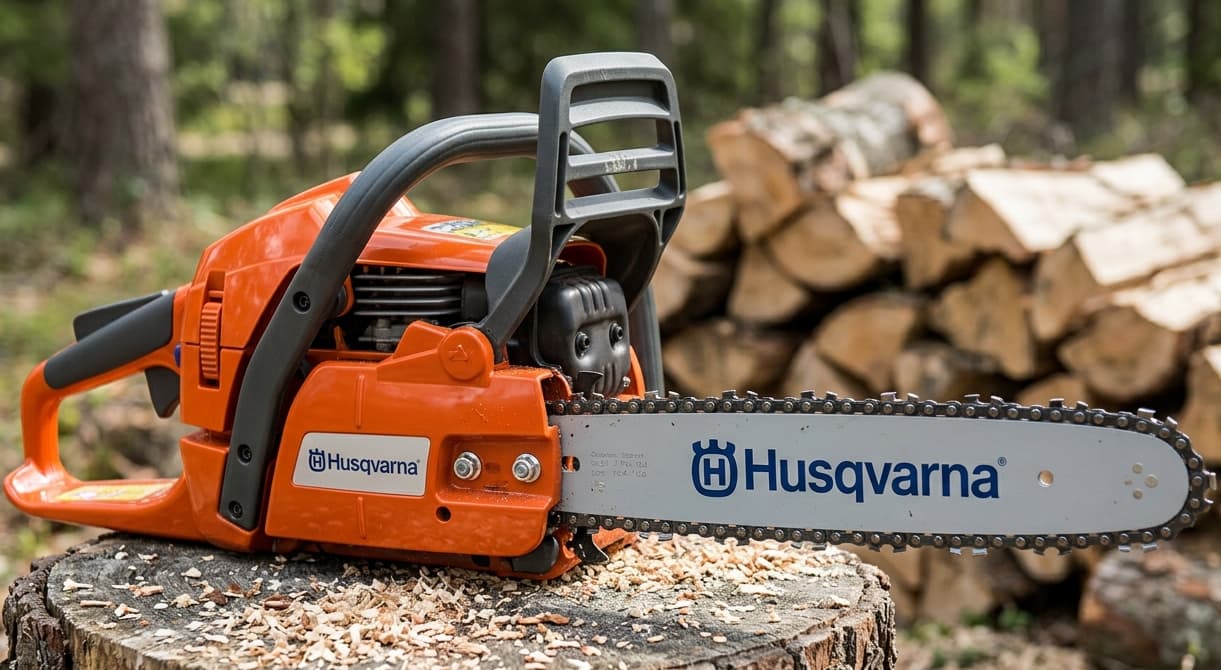

The Definitive Husqvarna 340 Manual: Specs, Parts & Performance 🌲
Exploring the engineering excellence of a mid-range titan that continues to dominate the forestry landscape.
In the world of arboriculture and land management, the Husqvarna 340 chainsaw represents a pivotal moment in the evolution of power tools. Developed during a period when Husqvarna focused intensely on ergonomics and power-to-weight ratios, the 340 emerged as the “sweet spot” for users who needed more than a hobby saw but didn’t want the weight of a heavy professional felling unit. Today, we peel back the layers of this 40cc beast to understand its enduring legacy.
🏗️ The Engineering DNA: 340 Husqvarna Chainsaw Specs
At its core, the 340 is built on the same chassis as its siblings, the 345 and 350. However, the 340 is tuned specifically for torque efficiency at mid-range RPMs. This makes it an exceptional tool for limbing and bucking firewood. Its 40.8cc displacement might seem modest by modern standards, but the Air Injection™ system—a centrifugal air cleaning system—ensures it maintains peak power even as the air filter begins to collect dust.
Engine Displacement
40.8 cc cylinder volume with a 40mm bore and 32.5mm stroke.
Power Output
2.0 kW / 2.7 hp at a maximum power speed of 9,000 RPM.
Chain Pitch
Standard .325″ pitch, ideal for fast, smooth cuts in medium timber.
🛠️ Essential Maintenance: Husqvarna 340 Chainsaw Parts
The longevity of a Husqvarna 340 is directly tied to its modularity. Unlike modern consumer saws that are often “disposable,” the 300-series was designed to be rebuilt. Whether you are looking for an OEM carburetor (Zama C3-EL18B) or an aftermarket cylinder kit, the availability of Husqvarna 340 chainsaw parts remains incredibly high.
Key components that owners should keep in their inventory include:
- Ignition Coil: Responsible for the 340’s legendary reliable starting.
- The Muffler: Often modified (“muffler modded”) by enthusiasts to unlock an additional 10-15% power by reducing back pressure.
- Clutch Assembly: Centrifugal clutch that ensures the chain only moves when throttle is applied.
- Anti-Vibration Springs: Part of the LowVib® system that isolates the engine from the handles.
| Component Category | Specification/Part Detail | Maintenance Interval |
|---|---|---|
| Air Filter | Felt or Nylon Mesh (Heavy Duty) | Every 10-15 working hours |
| Spark Plug | NGK BPMR7A (0.5mm gap) | Check every 50 hours |
| Oil Pump | Automatic / Fixed Flow Rate | Clean oil channel daily |
| Fuel Mix | 50:1 (Gas to 2-Stroke Oil) | Fresh mix every 30 days |
| Crankcase | Composite/Plastic Material | Inspect for heat stress yearly |
🚀 Performance Deep-Dive: Why It Still Matters
Why do arborists still hunt for the 340 on the used market? It’s about velocity and ergonomics. Modern saws are often bogged down by complex emissions hardware (like early M-Tronic or AutoTune systems). The 340 is a “pure” mechanical saw. Once the carburetor is tuned to your elevation, it provides a linear power delivery that is predictable and snappy.
The handling is where the 340 truly shines. Because the fuel tank is integrated into the handle assembly via vibration dampeners, the “feel” of the saw is neutral. This reduces Hand-Arm Vibration Syndrome (HAVS), a critical concern for anyone spending more than four hours a day with a saw in hand.
💡 Expert Tuning Insight: The “High Screw” Adjustment
The Husqvarna 340 is factory-set slightly “lean” to meet EPA standards of its time. For better engine cooling and longevity, many technicians recommend opening the “H” (High speed) screw on the carburetor by an 1/8th turn. This allows for a slightly richer fuel-to-air ratio, preventing the cylinder from overheating during heavy bucking. Warning: Always use a tachometer; never exceed 12,500 RPM out of wood.
🏁 How to Start a Husqvarna 340 Chainsaw Properly
Starting a vintage saw can be a ritual. The 340 doesn’t have the “Smart Start” spring-assisted recoil found on newer models, so your technique matters. Improper pulling can snap the starter rope or flood the engine.
- Positioning: Place the saw on level ground. Put your right boot into the rear handle to stabilize the unit.
- The Choke: Pull the blue lever out. This simultaneously closes the choke and sets the throttle to the “Fast Idle” position.
- Decompression: If your specific 340 model has a blue button on top of the cylinder, press it. It will pop back out once the saw fires.
- The Pull: Pull the starter grip slowly until you feel resistance (the pawls engaging), then give it a short, sharp tug.
- The Transition: Once the engine “coughs” (tries to start), push the choke lever in. Pull again, and the saw will roar to life at high idle. Immediately squeeze and release the throttle trigger to bring it down to a safe idling speed.
✅ The Advantages
- Weight: At 10.3 lbs, it is one of the lightest saws in its class.
- Durability: The Air Injection system significantly reduces engine wear.
- Mod-Friendly: Easily upgraded with 350 or 346XP components for pro-level performance.
- Ergonomics: Slim body design makes it easy to maneuver in thick brush.
⚠️ The Drawbacks
- Plastic Intake Clamp: The notorious plastic clamp can leak air and cause engine failure (should be replaced with metal).
- Power Ceiling: It will struggle with bars longer than 18 inches.
- Cold Starts: Can be temperamental if the fuel lines are aging or cracked.
💸 Market Value: Husqvarna 340 Chainsaw Price Analysis
Because the 340 is no longer available at retail, its price is dictated by its “cult” status among collectors and firewood cutters. In 2024, the Husqvarna 340 chainsaw price typically breaks down as follows:
- $125 – $175 (Project Condition): Usually has a scored piston or needs a complete fuel system rebuild.
- $200 – $275 (Good Condition): A reliable runner with typical scratches, ready for home use.
- $350+ (Collector Grade): Units with original stickers and low hours. These are increasingly rare and hold value well.
🔍 Common Troubleshooting & Repair Issues
If your 340 is acting up, check these three common failure points first:
- Fuel Line Degradation: Modern ethanol gas eats the rubber fuel lines of older 340s. If the saw starts but dies when tilted, check the fuel line for tiny cracks.
- Muffler Loose: The two long bolts holding the muffler can vibrate loose. This causes a loud exhaust leak and can actually melt the front plastic cover. Use high-temp thread locker.
- Oiling Problems: The oil drive gear is made of plastic. If your chain is dry, this gear has likely stripped and needs a $10 replacement.
❓ Frequently Asked Questions
For the best balance and chain speed, a 16-inch bar with a .325″ pitch is the “sweet spot.” A 13-inch bar makes it a pruning laser, while an 18-inch bar is the absolute maximum we recommend.
Absolutely. In fact, using pre-mixed, ethanol-free alkylate fuel is the best thing you can do for a 340. It prevents carburetor gumming and ensures the saw starts even after sitting for months.
Technically, no. It is classified as a “Consumer/Landowner” saw. However, its build quality is much closer to professional saws than the current 100 or 200 series models found in big-box stores.
The serial number is located on a metal tag riveted to the front of the saw, just behind the front handle and below the muffler.