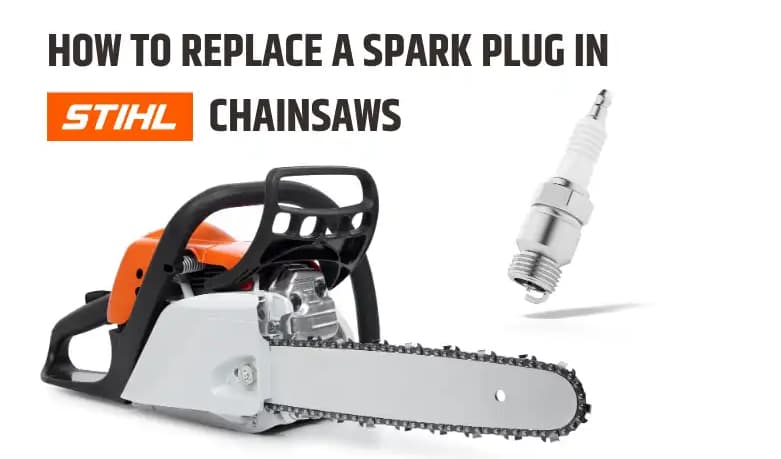

Stihl Chainsaw Spark Plug Replacement: The Complete Expert Guide
Everything you need to know about inspecting, diagnosing, and replacing the spark plug on your Stihl chainsaw — including model-specific specs, a full plug chart, gap settings, and step-by-step instructions. ⚡
The spark plug is one of the smallest — yet most critical — components in your Stihl chainsaw. A worn or fouled plug is responsible for a surprising number of starting problems, rough idling, and power loss issues that owners often misdiagnose as carburetor or fuel system failures. The good news? Replacing it takes less than 20 minutes and costs under $5. 💪
In this guide, we’ll walk you through everything you need to know: how to read your plug’s condition, which plug fits your specific Stihl model, the correct gap setting, thread size, and a detailed step-by-step replacement procedure.
🔍 What Your Spark Plug Is Telling You
Before reaching for a new plug, pull out the old one and examine it carefully. The color and condition of the electrode is a direct window into your engine’s health. Here’s how to read it:
🟤 Light Brown / Tan
Healthy. This is exactly what you want to see. The fuel-air mixture and plug heat range are correct. Inspect and re-gap if needed, but no replacement required.
⚫ Black & Sooty
Rich mixture. Too much fuel or too little air is entering the engine. Check the air filter, choke setting, and carburetor adjustment. Replace the plug.
⬜ White or Gray
Lean mixture. The engine is running too hot with insufficient fuel. Can indicate an air leak or carburetor issue. Replace immediately — this causes engine damage.
🔴 Wet with Oil
Oil fouled. Excess oil in the combustion chamber — often due to a wrong fuel mix ratio, worn piston rings, or a blown seal. Replace the plug and investigate the source.
🛠️ Tools You’ll Need
🚀 Step-by-Step: How to Replace a Stihl Chainsaw Spark Plug
- Let the engine cool completely. Never work on a hot engine. Wait at least 10–15 minutes after the last use before touching any components. 🌡️
- Clean the area around the plug. Use compressed air or a cloth to remove any debris from around the spark plug boot. Dirt falling into the cylinder during removal causes serious damage. 🧹
- Disconnect the spark plug boot. Grip the rubber boot firmly — not the wire itself — and pull it straight off the spark plug. Set it aside. 🔌
- Remove the old spark plug. Insert the plug wrench and turn counterclockwise. Remove slowly and inspect the plug’s condition using the diagnosis guide above. 🔍
- Check the new plug’s gap. Use a feeler gauge to verify the electrode gap. Most Stihl models require 0.020 inches (0.5 mm). Gently bend the ground electrode to adjust if needed — never force the center electrode. 📏
- Thread in the new plug by hand. Turn clockwise by hand first until snug. This prevents cross-threading which can destroy the cylinder head threads. 🖐️
- Tighten to spec with a torque wrench. Stihl recommends tightening to 18–20 Nm (160–177 in-lb). Never overtighten — the aluminum cylinder head threads strip easily. 🔩
- Reconnect the spark plug boot. Push the boot firmly onto the plug until you feel it click or seat securely. A loose boot causes misfires. ⚡
- Start the chainsaw and test. The saw should start within 2–3 pulls and idle smoothly. If it still runs rough, investigate the carburetor, fuel mix, or air filter. ✅
📐 Spark Plug Gap: Why It Matters
The electrode gap is the distance between the center electrode and the ground electrode — and it has a direct impact on spark quality, fuel efficiency, and engine reliability. Getting this right is just as important as choosing the correct plug type.
| Gap Condition | Effect on Engine | Symptoms | Action Required |
|---|---|---|---|
| ✅ Correct (0.020–0.025″) | Optimal combustion | Easy starts, smooth idle | None — run it |
| ⬇️ Too Small (< 0.018″) | Weak spark, incomplete burn | Hard starts, rough idle, power loss | Carefully widen gap |
| ⬆️ Too Large (> 0.030″) | Voltage can’t jump across gap | Misfires, carbon buildup, no start | Carefully narrow gap |
| 🔥 Worn / Eroded | Inconsistent spark timing | Intermittent running, high fuel use | Replace plug entirely |
📊 Stihl Chainsaw Spark Plug Chart (2026)
Below is a comprehensive reference chart covering the most popular Stihl chainsaw models and their correct spark plug specifications. Always verify with your owner’s manual before purchasing.
| Stihl Model | OEM Stihl Plug | Bosch Equivalent | Champion Equivalent | Gap | Thread Size |
|---|---|---|---|---|---|
| MS 170 | 1110 400 7005 | WSR6F | RCJ6Y Champion Pick | 0.020″ (0.5 mm) | M14 x 1.25 |
| MS 180 | 1130 400 7000 | WSR6F | RCJ6Y | 0.020″ (0.5 mm) | M14 x 1.25 |
| MS 250 Most Popular | 1123 400 7000 | WSR6F | RCJ6Y | 0.020″ (0.5 mm) | M14 x 1.25 |
| MS 025 (025) | 0000 400 7000 | WSR6F | RCJ6Y | 0.020″ (0.5 mm) | M14 x 1.25 |
| MS 271 | 1141 400 7000 | WSR6F | RCJ6Y | 0.020″ (0.5 mm) | M14 x 1.25 |
| MS 291 | 1141 400 7000 | WSR6F | RCJ6Y | 0.020″ (0.5 mm) | M14 x 1.25 |
| MS 311 / MS 391 | 1140 400 7005 | WSR6F | RCJ6Y | 0.020″ (0.5 mm) | M14 x 1.25 |
| MS 461 / MS 462 | 1122 400 7005 | WSR6F | RCJ7Y | 0.020″ (0.5 mm) | M14 x 1.25 |
| MS 661 / MS 881 | 1122 400 7005 | WSR6F | RCJ7Y | 0.025″ (0.6 mm) | M14 x 1.25 |
🔩 Stihl Chainsaw Spark Plug Thread Size
Virtually all modern Stihl chainsaw spark plugs use an M14 x 1.25mm thread pitch with a 9.5mm thread reach and a 19mm (3/4″) hex. This is a standard small-engine thread that is compatible with most automotive plug wrenches.
| Spec | Value | Notes |
|---|---|---|
| Thread Diameter | M14 | Standard across almost all Stihl models |
| Thread Pitch | 1.25 mm | Fine pitch — hand-thread carefully to avoid stripping |
| Thread Reach | 9.5 mm | Short reach — do not substitute a long-reach plug |
| Hex Size | 19 mm (3/4″) | Standard plug wrench size |
| Tightening Torque | 18–20 Nm | 160–177 in-lb — use a torque wrench for accuracy |
⛽ The Ethanol Problem: Protecting Your Spark Plug
One of the most overlooked causes of premature spark plug failure in Stihl chainsaws is the use of high-ethanol gasoline. Modern pump fuels often contain up to 10% ethanol (E10) — and some markets even sell E15 or E85. Here’s why this matters:
- 🌽 Ethanol burns hotter than pure gasoline, causing the electrodes to erode faster
- 💧 Ethanol absorbs moisture from the air, leading to phase separation in the fuel tank
- 🔥 High ethanol content causes the engine to run lean, which can appear as a white/gray plug
- ⏱️ Plugs may need replacement 30–50% sooner when using E10 vs. ethanol-free fuel
- ✅ Stihl recommends using ethanol-free fuel or a maximum of E10 for all their equipment
🏆 Champion Spark Plug for Stihl MS170: Full Breakdown
The Stihl MS170 is one of the best-selling entry-level chainsaws in the world, and the Champion RCJ6Y is the go-to aftermarket spark plug for this model. Here’s why it’s the preferred choice:
| Feature | Champion RCJ6Y | Bosch WSR6F | OEM Stihl Plug |
|---|---|---|---|
| Resistor Type | ✅ Yes | ✅ Yes | ✅ Yes |
| Correct Gap (pre-set) | 0.025″ (may need adjustment) | 0.020″ ✅ | 0.020″ ✅ |
| Average Street Price | ~$3–4 💰 | ~$4–5 💰 | ~$6–8 💰 |
| Availability | Widely available 🌍 | Widely available 🌍 | Stihl dealers only |
| Electrode Material | Copper core | Copper core | Copper core |
| Recommended By | ⭐ Most techs | ⭐ Good alternative | OEM spec |
🌬️ Don’t Forget the Air Filter
A fouled spark plug and a clogged air filter are often a package deal. If your plug was black from a rich mixture, there’s a good chance the air filter is partially blocked, starving the engine of the air it needs. Stihl recommends cleaning the air filter every 5 hours of operation:
- 🔓 Open the top cover by releasing the two clips (no tools required on most Stihl models)
- 🫁 Remove the foam or felt pre-filter and tap it gently against a hard surface to dislodge dust
- 💦 Wash foam filters in warm soapy water, rinse, and let dry completely before reinstalling
- 🚫 Never oil a Stihl chainsaw’s foam air filter — it will restrict airflow
- 🔄 Replace the filter entirely if it shows tears, deformation, or cannot be cleaned effectively
Replacing your Stihl chainsaw’s spark plug every 100 hours — or at the first sign of trouble — is the single highest-ROI maintenance task you can perform. It costs less than a coffee, takes 15 minutes, and can completely transform how your saw starts and runs. Don’t overlook it. ☕
❓ Frequently Asked Questions
🏁 Final Thoughts
Spark plug maintenance is the kind of job that separates people who have reliable chainsaws from those who are constantly dealing with starting problems. At less than $5 per plug and 15 minutes of work, it’s the most cost-effective maintenance task in your entire saw service schedule.
Remember the key takeaways: inspect every 10–15 hours, replace every 100 hours, always use a resistor-type plug, set the gap to 0.020 inches for most models, and torque to 18–20 Nm. Do these things consistently, and your Stihl will start first pull for years to come. 🍂🪚