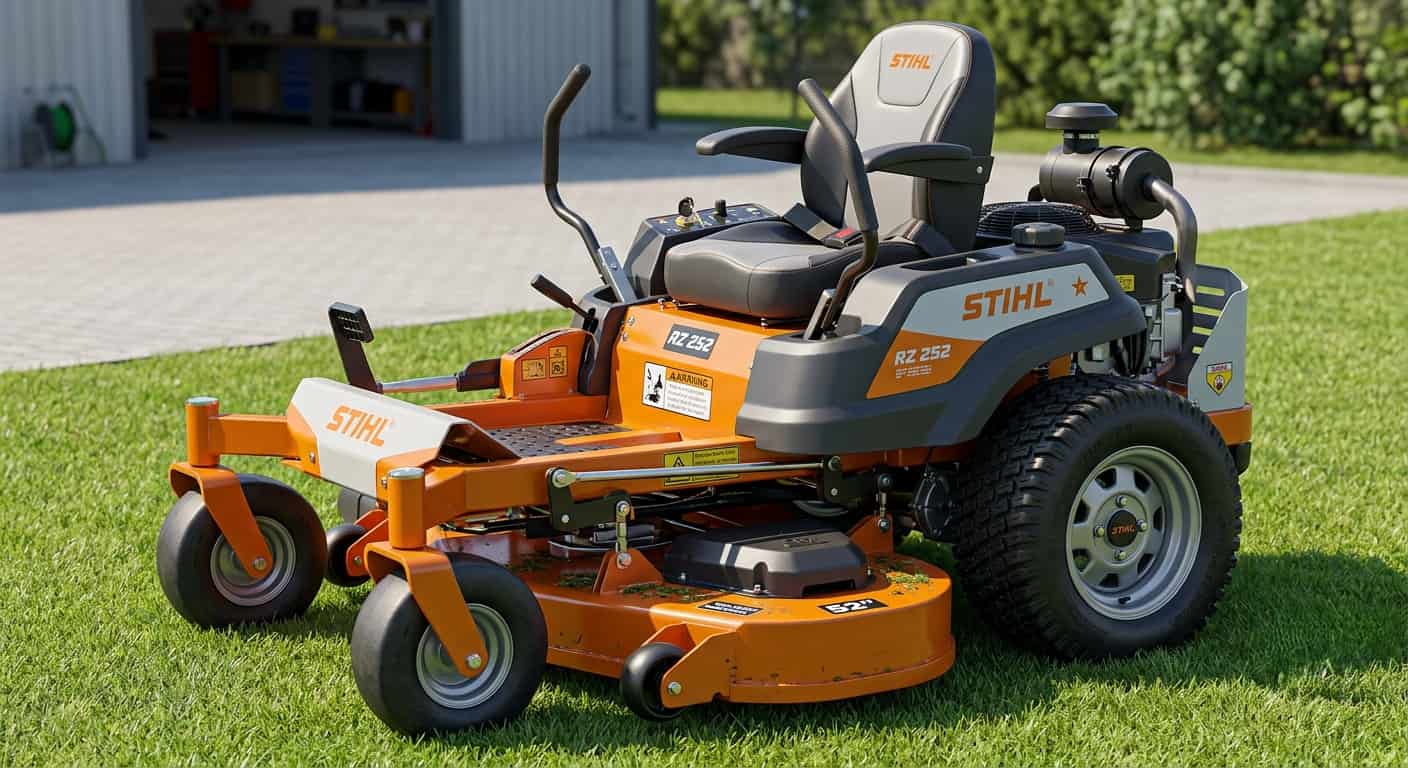

Mastering the Turf: The Ultimate Stihl Zero Turn Mower Technical Review 🚜
Uncompromising power, precision engineering, and professional-grade durability. Discover if the STIHL ZTR evolution lives up to the legendary chainsaw heritage.
For decades, STIHL has been the undisputed king of handheld outdoor power equipment. However, the landscape shifted when the brand entered the zero-turn mower market. By leveraging a strategic partnership and engineering prowess, STIHL has positioned itself as a formidable competitor to industry veterans like Scag, Gravely, and Husqvarna. In this deep dive, we explore every mechanical facet, price point, and performance metric to determine if a Stihl zero turn mower is truly worth your investment.
⚡ Performance Engine
Utilizing high-torque Kawasaki® FX and FT series engines, STIHL ZTRs offer consistent power delivery even in heavy, wet grass conditions.
🛡️ Built to Last
Fabricated (welded) steel decks ranging from 10-gauge to 7-gauge strength, providing superior structural integrity vs. stamped decks.
🏎️ Hydro-Gear® Drive
Equipped with commercial-grade Hydro-Gear® transaxles (ZT-3100 to ZT-5400) for smooth, responsive 360-degree maneuvering.
🔍 The Mechanical Core: What Makes a STIHL ZTR Tick?
Understanding the value of a STIHL mower requires looking beneath the orange shroud. Unlike entry-level residential mowers found in big-box stores, STIHL zero turn mowers are built primarily for longevity and serviceability. The lineup is categorized into several series: the 400, 500, 700, and the flagship 900 series.
One of the standout features in any stihl zero turn mower review is the deck design. STIHL uses a “bull-nose” front edge on their decks, which lifts the grass before it hits the blades, resulting in a cleaner cut at higher ground speeds. Furthermore, the spindles are often maintenance-free or easily accessible for greasing, reducing long-term friction wear.
⚔️ Stihl vs. Husqvarna: The Zero Turn Duel 🥊
When searching for a husqvarna stihl zero turn mower review, users often find that both brands offer exceptional performance, but their philosophies differ. Husqvarna often leans into ergonomic luxury and smart connectivity, whereas STIHL doubles down on “over-built” mechanical components.
- Stihl Advantage: Usually features a heavier-duty frame construction and a more simplified electrical system, which can be a boon for DIY mechanics.
- Husqvarna Advantage: Often provides a slightly more comfortable “cockpit” experience and a wider variety of residential-tier price points.
✅ The Pros
- Exceptional “Made in America” build quality (sourced from US facilities).
- Highly responsive dealer network for parts and service.
- Superior fuel efficiency in the EFI (Electronic Fuel Injection) models.
- High resale value compared to generic brands.
❌ The Cons
- Higher initial stihl zero turn mower price range.
- Heavier machines can lead to turf compaction if not handled carefully.
- Premium parts (like PTO clutches) can be expensive to replace.
📊 Technical Specifications & Price Range
The stihl zero turn mower price is reflective of its commercial-grade components. Below is a breakdown of what to expect across the popular series tiers.
| Model Series | Ideal Application | Engine Type | Estimated Price Range |
|---|---|---|---|
| 400 Series | Residential (1-3 Acres) | Kawasaki® FR Series | $4,500 – $6,000 |
| 500 Series | Prosumer / Large Estate | Kawasaki® FT Series | $6,500 – $8,500 |
| 700 Series | Commercial Daily Use | Kawasaki® FX Series | $9,000 – $12,000 |
| 900 Series | Maximum Productivity | EFI High-Output Engines | $13,000 – $18,000+ |
🛠️ Common Failures and Maintenance Tips
No machine is perfect. While stihl zero turn mower reviews are overwhelmingly positive, technical experts note a few areas that require attention:
- Hydrostatic Heat: In the 400 and 500 series, excessive hill climbing can overheat the Hydro-Gear ZT-2800/3100 units. Ensure the cooling fans are free of debris.
- Electrical Interlocks: The safety seat switch and parking brake sensors can occasionally go out of alignment, preventing the mower from starting. Always check these before assuming a battery or starter failure.
- Blade Sharpening: Due to the high tip speed of STIHL blades, they can dull faster in sandy soil. Keep a spare set (STIHL high-lift blades) ready for rotation.
💰 Is a Stihl Zero Turn Mower Worth the Investment?
When asking “is a stihl zero turn mower worth the investment?”, you must look at the “Total Cost of Ownership” (TCO). A cheaper mower might last 5-7 years with frequent repairs. A STIHL, when maintained according to the manual (changing oil every 50-100 hours and keeping the deck clean), can easily exceed 15-20 years of service life for a residential user.
The combination of a heavy-duty fabricated deck, a reputable Kawasaki engine, and the robust support of the STIHL dealer network makes it a “buy once, cry once” purchase. For those who value time and cut quality over the lowest possible price, the answer is a resounding yes.
❓ Frequently Asked Questions
Where are Stihl zero turn mowers manufactured?
STIHL zero-turn mowers are proudly manufactured in the United States, specifically at a dedicated facility in Virginia Beach, Virginia, ensuring high standards of quality control.
Which engine is better for a Stihl ZTR: Kawasaki or Briggs?
Most commercial users prefer the Kawasaki FX series found in higher-end STIHL models due to their legendary reliability and torque curves, though Briggs & Stratton Vanguard engines are also highly respected for their EFI efficiency.
What is the warranty on a Stihl zero turn mower?
STIHL typically offers a 3-year or 500-hour (whichever comes first) residential warranty and a 2-year commercial warranty, though these can vary by specific model and promotion.